Codename: Kids Next Door

Codename: Kids Next Door Picture
Codename: Kids Next Door, also known as Kids Next Door or by its acronym KND, was an American animated television series created by Tom Warburton and produced by Curious Pictures. The series debuted on Cartoon Network on December 6, 2002 and aired its final episode on January 21, 2008. The series came about as the result of a viewer's poll by Cartoon Network.
The main characters of the series are five kids who operate from their high-tech treehouse against the tyranny of adults and teenagers. They make up what is known as Sector V of a worldwide organization called the Kids Next Door.
Mr. Warburton created a pilot episode for another show, Kenny and the Chimp. Originally, there was a group of children who called themselves "The Kids Who Lived Next Door" among the recurring characters. The Kids Next Door would get Kenny into trouble. The plotline was then changed to focus on the group of kids alone, and later, the kids battling adulthood. In 2001, the show's pilot episode, "No P in the OOL", won a Cartoon Network viewer's poll. As a result, Codename: Kids Next Door was greenlit to become a series
The episodes are titled as the Kids Next Door's missions, denoted as "Operation:" followed by an acronym which often gives viewers clues as to what the story is about. Every mission may or may not be chronologically ordered in relation to the previous or the next, but it's accepted that most of the time they occur in the order that the episodes are shown. Sometimes missions make a references to a certain situations, or lead to consequences in another mission. Mostly in the earlier episodes, the stories were often about typical childhood problems, but magnified and exaggerated. As the series progressed, a bigger, more complex storyline was developed.
Codename: Kids Next Door Image
The Kids Next Door Organization is a worldwide group comprising thousands of kids joined in mutual struggle against adult tyranny. They fight villains that embody specific menaces to children overall; such as Knightbrace (going to the dentist), Count Spankulot (spanking), the Common Cold (self-explanatory), Windsor and the Queen Tie (wearing ties), Mrs. Dirt (taking a bath), and Father/Benedict Uno, (the ultimate figure of authority). For every member of Kids Next Door, upon following a period of training, the kids are then assigned a number or alphanumerical code (pronounced "numbuh") and sent to a "sector", that is, a treehouse of gigantic proportions. The main headquarters of the Kids Next Door, the Moon Base, is located on the moon. Kids follow their oath of protecting other kids as well as battling adulthood until the age of 13, when they are "decommissioned": their brains are washed-clean of memories of any past KND activity, upon which they are thence considered teenagers, and a threat to KND as well. The practice of strict decommissioning at age 13 was later on revealed to be subject to some exceptions: kids who have proved to be exceptional agents are offered the chance to carry on in KND as spies infiltrating the teen organization (see Maurice for a prime example). This practice is kept secret. Decommissioning has also proved reversible due to errors and thus brainwashing is not necessarily permanent.(Wikipedia)
Codename: Kids Next Door WallpaperCodename: Kids Next Door Wallpaper

Codename: Kids Next Door PhotoCodename: Kids Next Door Photo

Jimmy Neutron Cartoon Series

Jimmy Neutron Wallpaper
The Adventures of Jimmy Neutron: Boy Genius, formerly Jimmy Neutron: Boy Genius, was an American animated television series, and spin-off of the Academy Award-nominated computer-animated movie, Jimmy Neutron: Boy Genius. It first officially aired on September 6, 2002. It was also the very first computer-animated Nicktoon.
After declining ratings and other factors, Nickelodeon canceled the series, originally along with The Fairly OddParents, after the two cartoons merged for the third time in a TV movie. Since then, no announcements have been made to continue the series, yet the Fairly OddParents is slated for another 20 episodes.
The series is about a child genius and inventor named Jimmy Neutron in the fictional town of Retroville, who gets in and out of trouble by inventing complex gadgets. Jimmy's main catchphrases are "Gotta Blast!", "Brain Blast!", or simply the most overused phrases, "I've Got It!" or "That's It!", which he says after coming up with the ultimate idea to solve the problem. Jimmy typically has a "Brain Blast" once an episode, usually at his climax of the story when all other ideas have failed, and it is accompanied by a display of his ideas floating within the inner workings of his brain.
Jimmy Neutron Picture
The television series was produced by O Entertainment for the Nickelodeon cable channel, and animated by DNA Productions using LightWave 3D software as was the movie. A television movie, Win, Lose and Kaboom, formerly named You Bet Your Life Form, aired on Nickelodeon in early-July 2004. A second television movie, The League of Villains, aired on Nickelodeon in mid-June 2005. In 2004, head writer Steven Banks was nominated for a Writer's Guild Award for the episode Operation: Rescue Jet Fusion. The first Jimmy Neutron mini-episodes aired before the Jimmy Neutron movie and can be seen only on Nicktoons Network, the movie web site, and on later versions of the DVD release of the original movie. The series officially ended on July 21, 2006Template:Fact but one new episode aired on November 17, 2006 and the final two aired November 25, 2006. Most articles consider either King of Mars, The League of Villains or the TV movie Jimmy/Timmy Power Hour III: The Jerkinators to be the last episodes of the series. However in reality, the episode Lady Sings the News was the most recently aired during the show's original run, thus making it the last episode of the series. But in the 2008 World Records book, it ranks Jimmy Neutron as the #10 most watched TV show (One of two cartoons to make the countdown (The other was The Simpsons at number 5). There are no plans for a fourth season. (Wikia.com)
Jimmy Neutron PhotoJimmy Neutron Photo

Jimmy Neutron ImageJimmy Neutron Image

Jimmy Neutron PosterJimmy Neutron Poster

Ren and Stimpy Image Gallery

Ren and Stimpy Picture
The Ren and Stimpy Show is an American/Canadian animated television series created by Canadian animator John Kricfalusi. The series follows the adventures of the eponymous characters: Ren Höek, a neurotic "asthma-hound" chihuahua, and Stimpson J. Cat, — a simpleminded manx cat. They wander around in nonsensical adventures in a style reminiscent of the Golden Age of American animation.
A series from the children's cable network Nickelodeon, The Ren and Stimpy Show had a reputation for subversive humor. The controversy mostly stemmed from imagery and cartoon violence. In 1992, Nickelodeon fired Kricfalusi and production moved from Kricfalusi's Spümcø studios to Games Animation, where it stayed until its cancellation in 1997. Re-runs currently air on Nicktoons Network.
Ren Höek (first appearance: "Big House Blues", 1990) is a Chihuahua dog. Martin "Dr. Toon" Goodman of Animation World Magazine described Ren as "scrawny," "dyspeptic," and "violently psychotic."
Ren and Stimpy Image
Kricfalusi originally voiced Ren, using what he described as "a bad imitation of Peter Lorre" 53. When Nickelodeon fired Kricfalusi, Billy West, already the voice of Stimpy, took the role using a combination of Burl Ives, Kirk Douglas, and a slight "south of the border accent" for the rest of the Nickelodeon run. Kricfalusi returned to the voice for the Nickelodeon series and Ren & Stimpy Adult Party Cartoon on Spike TV and Adult Swim.
Stimpson "Stimpy" J. Cat (first appearance: "Big House Blues", 1990) is a fat, untailed, red and white Manx cat with a blue nose, purple eyelids, human-style buttocks, and flat feet. Martin "Dr. Toon" Goodman of Animation World Magazine described Stimpy as "obese," and "brain-damaged." West voiced Stimpy for the Spümcø and Games Animation episodes, basing the voice on an "amped-up" Larry Fine. Eric Bauza portrayed the character in Adult Party Cartoon.
Ren and Stimpy Photo
The show features a host of supporting characters, both recurring and single episode appearances, although Ren and Stimpy are the only characters to appear in every episode. Some of the supporting characters factor directly into the storyline (such as George Liquor) while others make brief cameos. Other characters, such as Mr. Horse, are exclusively cameo-based, appearing in many episodes in bits that have little bearing on the plot.
In a 1993 interview, Bill Wray stated that he believes that Kricfalusi created the Ren and Stimpy characters around 15 years prior, for Kricfalusi's personal amusement during his years in Sheridan College in Canada. According to commentary in the DVD box set of the show's first two seasons, Ren was inspired by a 1940s-era photograph of a chihuahua with its owner while Stimpy was based on a "stupid cat" character he had created in the aforementioned time frame. Wray said that he had initially "forgotten about" the characters. When Nickelodeon requested new series, Kricfalusi assembled a presentation called "Our Gang", similar to a children's show with a live action host presenting various cartoons. Each cartoon parodied a genre, and Ren and Stimpy parodied the "cat and dog" genre. Vanessa Coffey, the producer of the show, said that she did not like the general idea but that she liked Ren and Stimpy.(Wikipedia)
Ren and Stimpy WallpaperRen and Stimpy Wallpaper

Ren and Stimpy PictureRen and Stimpy Picture

Fat Albert and the Cosby Kids Wallpaper

Fat Albert and the Cosby Kids Wallpaper
Fat Albert and the Cosby Kids is an animated series created, produced, and hosted (in live action bookends) by comedian Bill Cosby, who also lent his voice to a number of characters, including the titular one. Filmation was the production company for the series.
Fat Albert first appeared in Cosby's stand-up comedy routine "Buck Buck," as recorded on his 1967 album Revenge. The stories were based upon Cosby's tales about growing up in inner city North Philadelphia. In 1969, Cosby and veteran animators Ken Mundiewho brought Fat Albert to animation in a one-shot prime-time special entitled Hey, Hey, Hey, It's Fat Albert.
The special, which aired on NBC, was a hybrid of live-action and animation. The music for the special (and later the series) was written and performed by jazz pianist/keyboardist Herbie Hancock in 1969 and was released on the Warner Bros. album Fat Albert Rotunda.
Fat Albert and the Cosby Kids Picture
The producers wanted NBC to bring Fat Albert to Saturday mornings, but they refused because the series was too educational. So, Bill Cosby and a new production company, Filmation Associates, took the property to CBS.The Fat Albert Gang's character images were primarily created by the artist Randy Hollar with the assistance of one-time Disney animator Michelle McKinney, under the direction of Ken Brown.
The series, now titled Fat Albert and the Cosby Kids, premiered on September 9, 1972 on CBS for a 12-year run (however, it was not in continuous production). It also spent another season in first-run syndication in 1984-1985. Several prime-time holiday specials featuring the characters were also produced. Like most animated series at the time, Fat Albert and the Cosby Kids contained a laugh track.
Fat Albert and the Cosby Kids received an Emmy nomination in 1974. Production of the series overlapped with the start of production of Cosby's live-action sitcom, The Cosby Show, which began airing in the fall of 1984.
In 2002, Fat Albert was placed at number 12 on TV Guide's list of the 50 Greatest Cartoon Characters of All Time(Wikipedia)
Fat Albert and the Cosby Kids ImageFat Albert and the Cosby Kids Image

Fat Albert and the Cosby Kids PhotoFat Albert and the Cosby Kids Photo

Fat Albert and the Cosby Kids PosterFat Albert and the Cosby Kids Poster

Scooby Doo Cartoon Gallery

Scooby Doo Cartoon
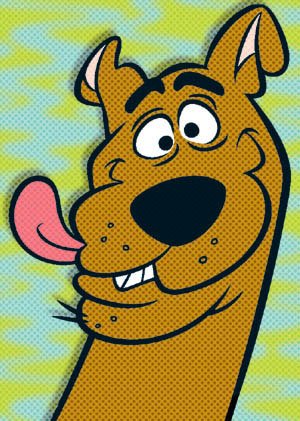
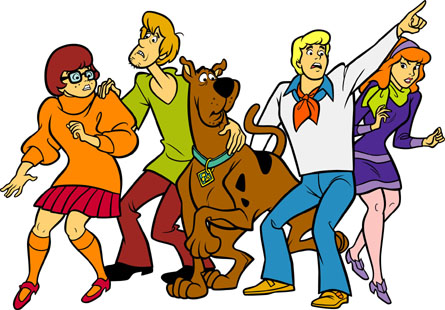
Scooby-Doo is a long-running American animated series produced for Saturday morning television in several different versions from 1969 to the present. The original series, Scooby-Doo, Where Are You!, was created for Hanna-Barbera Productions by writers Joe Ruby and Ken Spears, CBS executive Fred Silverman, and character designer Iwao Takamoto. Hanna-Barbara produced numerous spin-offs and related works until being absorbed in 1997 into Warner Bros. Animation, which has handled production since then. Although the format of the show and the cast (and ages) of characters have varied significantly over the years, the most familiar versions of the show feature a talking dog named Scooby-Doo and four twenty-five-year-olds: Fred "Freddie" Jones, Daphne Blake, Velma Dinkley, and Norville "Shaggy" Rogers.
These five characters (officially collectively known as "Mystery, Inc.", but never referred to as such in the original series) drive around the world in a van called the "Mystery Machine", and solve mysteries typically involving tales of ghosts and other supernatural forces. At the end of each episode, the supernatural forces usually turn out to have a rational explanation, with the young investigators discovering that criminal had used costumes, latex masks and special effects to frighten or deceive witnesses. That puts the series squarely in the old tradition of the "impossible crime" mystery (made famous by such writers as John Dickson Carr).
Later versions of Scooby-Doo featured different variations on the show's supernatural theme, and include characters such as Scooby's cousin Scooby-Dum and nephew Scrappy-Doo in addition to or instead of some of the original characters.
Scooby-Doo was originally broadcast on CBS from 1969 to 1976, when it moved to ABC. ABC aired the show until canceling it in 1986, and presented a spin-off, A Pup Named Scooby-Doo, from 1988 until 1991. The WB Network's Kids' WB programming block, later created an updated version of the series called What's New Scooby Doo? which ran from 2002 to 2006. The most recent Scooby-Doo series, Shaggy & Scooby-Doo Get a Clue!, ran from 2006 to 2008 on The CW network. Repeats of the series are broadcast frequently on the Cartoon Network and Boomerang in the United States and other countries.
Scooby Doo Wallpaper
In 1969, many of a number of parent-run organizations, most notably Action for Children's Television (ACT), began vocally protesting what they perceived as an excessive amount of gratuitous violence in Saturday morning cartoons during the mid-to-late 1960s. Most of these shows were Hanna-Barbera action cartoons such as Jonny Quest, Space Ghost and The Herculoids, and virtually all of them were canceled by 1969 because of pressure from the parent groups. Members of these watchgroups served as advisers to Hanna-Barbera and other animation studios to ensure that their new programs would be safe for children.
Fred Silverman, executive in charge of children's programming for the CBS network at the time, was looking for a show that would revitalize his Saturday morning line and please the watchgroups at the same time. The result was The Archie Show, based upon Bob Montana's teenage humor comic book Archie. Also successful were the musical numbers The Archies performed during each program (one of which, "Sugar, Sugar", was the most successful Billboard number-one hit of 1969). Silverman was eager to expand upon this success, and contacted producers William Hanna and Joseph Barbera about possibly creating another show based around a teenage rock group, but with an extra spice: the kids would find mysteries in between their gigs. Silverman envisioned the show as a cross between the popular I Love a Mystery radio serials of the 1940s and the popular early 1960s TV show The Many Loves of Dobie Gillis.
Hanna and Barbera passed this task along to two of their head story writers, Joe Ruby and Ken Spears, and artist/character designer Iwao Takamoto. Their original concept of the show bore the title Mysteries Five, and featured five teens (Geoff, Mike, Kelly, Linda, and Linda's brother "W.W.") and their dog, Too Much, who were all in a band called "The Mysteries Five" (even the dog; he played the bongos). When "The Mysteries Five" were not performing at gigs, they were out solving spooky mysteries involving ghosts, zombies, and other supernatural creatures. Ruby and Spears were unable to decide whether Too Much would be a large cowardly dog or a small feisty dog. When the former was chosen, the options became a large goofy German Shepherd or a big shaggy sheepdog. After consulting with Barbera on the issue, Too Much was finally set as a Great Dane, primarily to avoid a direct correlation to The Archies (who had a sheepdog, Hot Dog, in their band). Ruby and Spears feared the Great Dane would be too similar to the comic strip character Marmaduke, but Barbera assured them it would not be a problem.
Scooby Doo Picture
Takamoto consulted a studio colleague who happened to be a breeder of Great Danes. After learning the characteristics of a prize-winning Great Dane from her, Takamoto proceeded to break most of the rules and designed Too Much with overly bowed legs, a double chin, and a sloped back, among other abnormalities.
By the time the show was ready for presentation by Silverman, a few more things had changed: Geoff and Mike were merged into one character called "Ronnie" (later renamed "Fred", at Silverman's behest), Kelly was renamed to "Daphne", Linda was now called "Velma", and Shaggy (formerly "W.W.") was no longer her brother. Also, Silverman – not being very fond of the name Mysteries Five – had renamed the show Who's S-S-Scared? Using storyboards, presentation boards, and a short completed animation sequence, Silverman presented Who's S-S-Scared? to the CBS executives as the centerpiece for the upcoming 1969–1970 season's Saturday morning cartoon block. The executives felt that the presentation artwork was too spooky for young viewers and, thinking the show would be the same, decided to pass on it.
Now without a centerpiece for the upcoming season's programming, Silverman turned to Ruby and Spears, who reworked the show to make it more comedic and less frightening. They dropped the rock band element, and began to focus more attention on Shaggy and Too Much. According to Ruby and Spears, Silverman was inspired by Frank Sinatra's scat "doo-be-doo-be-doo" he heard at the end of Bert Kaempfert's song "Strangers in the Night" on the way out to one of their meetings, and decided to rename the dog "Scooby-Doo" and re-rechristen the show Scooby-Doo, Where Are You! The revised show was re-presented to CBS executives, who approved it for production.
It is also worth noting the similarity between the core premise of this and Enid Blyton's Famous Five books. Both series featured four youths with a dog. In both, one of the girls was attractive (Daphne/Anne) while the other plain (Velma/Georgina) and frequently the Famous Five stories would revolve around a mystery which would invariably turn out not to be mysterious but a plot to disguise the villain's true intents.(Wikipedia)
Scooby Doo ImageScooby Doo Image

Scooby Doo PosterScooby Doo Poster