Piter Pan

Piter Pan
Peter Pan, or The Boy Who Wouldn't Grow Up and Peter and Wendy are the stage play and novel (respectively) which tell the story of Peter Pan, a mischievous little boy who can fly, and his adventures on the island of Neverland with Wendy Darling and her brothers, the fairy Tinker Bell, the Lost Boys, the Indian princess Tiger Lily, and the pirate Captain Hook. The story was written by Scottish playwright and novelist J. M. Barrie, inspired by his friendship with the Llewelyn-Davies family.
The play debuted in London December 27, 1904 with Nina Boucicault in the titular role. A Broadway production was mounted in 1905 starring Maude Adams. The play has since seen adaptation as musical, animated film, and live-action film, and is rarely performed in its original.
The novel was first published in 1911 by Hodder & Stoughton in the United Kingdom and Charles Scribner's Sons in the United States. The original book contains a frontispiece and 11 half-tone plates by artist F. D. Bedford. Peter and Wendy is published today as Peter Pan and Wendy or simply Peter Pan.
In 1929, Barrie indicated that the copyright of the Peter Pan works should go to Great Ormond Street Hospital, a children's hospital in London. The copyright's status has since become complicated. The tale of Peter Pan has remained popular among children and adults since its first publication and has taken its place as an unquestioned piece of classic theatre and literature.
Barrie created Peter Pan in stories he told to the sons of his friend Sylvia Llewelyn Davies, with whom he had forged a special relationship. Mrs. Llewelyn Davies' death from cancer came within a few years after the death of her husband. Barrie was named as co-guardian of the boys and unofficially adopted them.
The character's name comes from two sources: Peter Llewelyn Davies, one of the boys, and Pan, the mischievous Greek god of the woodlands. It has also been suggested that the inspiration for the character was Barrie's elder brother David, whose death in a skating accident at the age of thirteen deeply affected their mother. According to Andrew Birkin, author of J.M. Barrie and the Lost Boys, the death was 'a catastrophe beyond belief, and one from which she never fully recovered... If Margaret Ogilvy [Barrie's mother as the heroine of his 1896 novel of that title] drew a measure of comfort from the notion that David, in dying a boy, would remain a boy for ever, Barrie drew inspiration.
Piter Pan Wallpaper
The Peter Pan character first appeared in print in the 1902 novel The Little White Bird, written for adults, a fictionalised version of Barrie's relationship with the Llewelyn Davies children. The character was next used in the very successful stage play Peter Pan, or The Boy Who Wouldn't Grow Up that premiered in London on December 27, 1904.
In 1906, the portion of The Little White Bird which featured Peter Pan was published as the book Peter Pan in Kensington Gardens, with illustrations by Arthur Rackham.[3] Barrie then adapted the play into the 1911 novel Peter and Wendy (most often now published simply as Peter Pan).
The original draft of the play was entitled simply Anon: A Play ('Anon' being a name Barrie used in reference to himself). Barrie's working titles for it included The Great White Father and Peter Pan, or The Boy Who Hated Mothers. Producer Charles Frohman disliked the title on the manuscript, in answer to which Barrie reportedly suggested The Boy Who Couldn't Grow Up; Frohman suggested changing it to Wouldn't.
Although the character appeared previously in Barrie's book The Little White Bird, the play and the novel based on it contain the portion of the Peter Pan mythos that is best known. The two versions differ in some details of the story, but have much in common. In both versions Peter makes night-time calls on Kensington, London, listening in on Mrs. Mary Darling's bedtime stories by the open window. One night Peter is spotted and, while trying to escape, he loses his shadow. On returning to claim it, Peter wakes Mary's daughter, Wendy Darling. Wendy succeeds in re-attaching his shadow to him, and Peter learns that she knows lots of bedtime stories. He invites her to Neverland to be a mother to his gang, the Lost Boys, children who were lost in Kensington Gardens. Wendy agrees, and her brothers John and Michael go along.
Piter Pan Picture
Their magical flight to Neverland is followed by many adventures. The children are blown out of the air by a cannon and Wendy is nearly killed by the Lost Boy Tootles. Peter and the Lost Boys build a little house for Wendy to live in while she recuperates (a structure that, to this day, is called a Wendy House.) Soon John and Michael adopt the ways of the Lost Boys.
Illustration by F. D. Bedford from the first edition
Peter welcomes Wendy to his underground home, and she immediately assumes the role of mother figure. Peter takes the Darlings on several adventures, the first truly dangerous one occurring at Mermaids' Lagoon. At Mermaids' Lagoon, Peter and the Lost Boys save the princess Tiger Lily and become involved in a battle with the pirates, including the evil Captain Hook. Peter is wounded when Hook claws him. He believes he will die, stranded on a rock when the tide is rising, but he views death as "an awfully big adventure". Luckily, a bird allows him to use her nest as a boat, and Peter sails home.
Because he has saved Tiger Lily, the Indians are devoted to him, guarding his home from the next imminent pirate attack. Meanwhile, Wendy begins to fall in love with Peter. Peter is confused and disturbed by this turn of events; when he voices his concern, he hurts Wendy's feelings, and she decides to take John and Michael and return to England. Unfortunately, and unbeknownst to Peter, Wendy and the boys are captured by Captain Hook, who also tries to poison Peter's medicine while the boy is asleep. When Peter awakes, he learns from the fairy Tinker Bell that Wendy has been kidnapped – in an effort to please Wendy, he goes to drink his medicine. Tink does not have time to warn him of the poison, and instead drinks it herself, causing her near death. Peter invokes the sympathy of children who might be dreaming of him, and Tinker Bell is saved.
Piter Pan Photo
Peter heads to the ship. On the way, he encounters the ticking crocodile; Peter decides to copy the tick, so any animals will recognize it and leave him unharmed. He does not realize that he is still ticking as he boards the ship, where Hook cowers, mistaking him for the crocodile. While the pirates are searching for the croc, Peter sneaks into the cabin to steal the keys and free the Lost Boys. When the pirates investigate a noise in the cabin, Peter defeats them. When he finally reveals himself, he and Hook fall to in the climactic battle, which Peter easily wins. He kicks Hook into the jaws of the waiting crocodile, but the wicked pirate promises that he will return. Then Peter takes control of the ship, and sails the seas back to London.
In the end, Wendy decides that her place is at home, much to the joy of her heartsick mother. Wendy then brings all the boys but Peter back to London. Before Wendy and her brothers arrive at their house, Peter flies ahead, to try and bar the window so Wendy will think her mother has forgotten her. But when he learns of Mrs Darling's distress, he bitterly leaves the door unlocked and flies away. Peter returns briefly, and he meets Mrs. Darling, who has agreed to adopt the Lost Boys. She offers to adopt Peter as well, but Peter refuses, afraid they will "catch him and make him a man". It is hinted that Mary Darling knew Peter when she was a girl, because she is left slightly changed when Peter leaves.
Peter promises to return for Wendy every spring, but he remembers only twice — Peter is usually very forgetful, however; after the passing of only one year, he has already forgotten Captain Hook and Tinker Bell. He returns for Wendy years later, but Wendy is now grown, with a daughter of her own. When Peter learns that Wendy has betrayed him by growing up, he is angry and heartbroken. But Wendy's daughter Jane agrees to come to Neverland as Peter's new mother. By the end of the novel, even Jane has grown up, and Peter takes her daughter Margaret to Neverland. Barrie says this cycle will go on forever as long as children are "innocent and heartless". This epilogue is only occasionally used in presentations of the drama, but it made a poignant conclusion to the famous musical production starring Mary Martin, and provided the premise for Disney's sequel to their animated adaptation of the story.(wikipedia)
Piter PanPiter Pan

Best Image of Tinker Bell

Tinker Bell Photo
Tinker Bell (also known as Tinkerbell in common usage, or Tink for short), is a fictional character from J. M. Barrie's 1904 play and 1911 novel Peter and Wendy. She has also appeared in multiple film and television adaptations of the story, in particular the 1953 animated Walt Disney picture Peter Pan. She also appears in the "Peter and the Starcatchers" book series by Ridley Pearson and Dave Barry. At first only a supporting character described by her creator as "a common fairy", her animated incarnation was a hit and has since become a widely recognized unofficial mascot of The Walt Disney Company, and the centerpiece of its Disney Fairies media franchise including the direct-to-DVD film Tinker Bell. In her animated form she leaves a trail of twinkling pixie dust.
Film adaptations provided the first vocal effects for the character, whether through sound — such as musical expressions or the sound of a tinkling bell — or human speech. In her most widely known appearance in the 1953 animated Peter Pan film, the character was animated and had no dialogue. She was played by Virginia Browne Faire in Herbert Brenon's 1924 version of Peter Pan, Julia Roberts in 1991's Hook, and by Ludivine Sagnier in P.J. Hogan's 2003 adaptation, which originally planned to use a computer-generated version of the character, but instead used Sagnier in combinations with digital models and effects to take advantage of the actress's expressions. Tinker Bell was voiced by Debi Derryberry in the 1990 Fox animated program Peter Pan and the Pirates, by Sumi Shimamoto in the 1989 anime series Peter Pan no Boken, and by Mae Whitman in the digitally animated 2008 DVD feature Tinker Bell.
Tinker Bell Poster
Tinker Bell has been one of Disney's most important branding icons for over half a century, and is generally known as "a symbol of 'the magic of Disney'."[5] She has been featured in television commercials and program opening credits sprinkling pixie dust with her wand in order to shower a magical feeling over various other Disney personalities, though the 1953 animated version of Tinker Bell never actually used a wand. In the picture and the official Disney Character Archives, she is referred to as a pixie, and the term pixie dust is a description of the "fairy dust" she uses in the original book.
Despite an urban legend that the original animated version of Tinker Bell was modeled after Marilyn Monroe, Disney animator Marc Davis's reference was actress Margaret Kerry.[1] He illustrated Tinker Bell as a young blonde woman clad in a lime-green, hip-length dress with a rigid trim, and green slippers with white puffs. She is trailed by small amounts of pixie dust when she moves, and this dust can help humans fly if they believe it will.
Tinker Bell
Since 1954, Tinker Bell has featured as a hostess for much of Disney's live-action television programming, beginning with Disneyland (which first introduced the theme park to the public while it was still under construction), to Walt Disney Presents, Walt Disney's Wonderful World of Color, and The Wonderful World of Disney. In 1988, the same year The Wonderful World of Disney moved from ABC to NBC as The Magical World of Disney, she closed the end of Who Framed Roger Rabbit with a sprinkling of fairy dust as the screen went to black prior to the closing credits. She also starred alongside other Disney characters, such as Chip 'n Dale, in many Disney comics, where she was also able to speak. An animated feature starring Disney's version of the character was released on DVD and Blu-Ray on October 28, 2008.
At Disneyland, Tinker Bell is prominently featured in Peter Pan's Flight, a suspended dark ride based on the artwork from the animated film. Located in Fantasyland, it is one of the few remaining original attractions from the park's opening day. Beginning in 1961, she was also featured as a live performer who flew through the sky at the climax of some of the nightly fireworks displays. She was originally played by 71-year-old former circus performer Tiny Kline, up until her retirement three years later.
On the 2008 Walt Disney World Christmas Day Parade special on ABC, Disney announced that a Tinker Bell float would be added to the classic Disney's Electrical Parade at Disney's California Adventure at the Disneyland Resort, the first new float to be added since even long before the parade ended its original run at Disneyland in 1996
Tinker Bell was part of the Disney Princess franchise, from which she was later extracted and converted into the central character of the new Disney Fairies franchise in 2005. In addition to an extensive line of merchandise, 2008's Tinker Bell film is the first of four upcoming direct-to-DVD features set in Pixie Hollow. At Disneyland, a Pixie Hollow meet-and-greet area opened on October 28, 2008, near the Matterhorn, where guests are able to interact with Tinker Bell and her companions (wikipedia)
Best Image of Tinker BellBest Image of Tinker Bell

Tinker BellTinker Bell

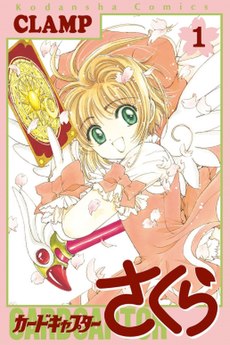
Cardcaptor Sakura Japanese Manga Series

Cardcaptor Sakura Wallpaper
Cardcaptor Sakura (カードキャプターさくら, Kādokyaputā Sakura?), also known as Cardcaptors and abbreviated as CCS, is a Japanese manga series written and illustrated by CLAMP. Cardcaptor Sakura is published in Japan by Kodansha and was serialized in Nakayoshi. The series consists of twelve volumes. The manga is well-known for its emphasis on the shōjo genre of the series; nearly every page has detailed flowers, bubbles, or sparkles around the main characters. It won the noted Seiun Award for best manga in 2001.
The anime television series (1998-2000) based on the manga consists of 70 half-hour episodes (spread over three seasons), two theatrically released movies, and several specials. The second season of TV series won the Animage Anime Grand Prix prize in 1999. Nelvana produced an English dub of the anime series, titled Cardcaptors, which aired in English-speaking countries.[1] An unedited English translation, bearing the original title, Cardcaptor Sakura, was broadcast in its English-language networks by the anime television network Animax. Cardcaptor Sakura has also been released in North America on unedited and subtitled DVDs.
Several characters from Cardcaptor Sakura are reworked for use in another Clamp series, Tsubasa: Reservoir Chronicle. These characters share similar appearances and traits to their Cardcaptor Sakura inspirations, but they are not the same characters, rather alternate universe versions.
Ten-year-old fourth grader Sakura Kinomoto opens a mysterious book in her father's study and accidentally releases the magical Clow Cards. Created by the half-English half-Chinese sorcerer Clow Reed, the Clow Cards were sealed within the Clow Book upon his death and represent a combination of magic from Clow's mixed heritage. Each card has its own personality and characteristics and can assume alternate forms when activated.
Cardcaptor Sakura
Cerberus, the guardian Beast of the Seal, awakens and emerges from the book's cover. Upon learning the cards are gone, he tells Sakura that she must have special powers, and that is now her responsibility to retrieve the missing cards. As she finds the cards, she must battle its magical personification and defeat it in order to seal it away. Cerberus acts as her guide and mentor throughout the quest, while her classmate and best friend Tomoyo Daidouji films her exploits and provides her with costumes, insisting that she must "wear special clothes for special occasions." Her older brother Toya Kinomoto watches over his sister while pretending that he is unaware of what is going on.
As the series progresses, a rival in the form of Syaoran Li appears. A descendant of the late Clow Reed, creator of the Clow Cards' and their guardians, Syaoran travels to Japan from Hong Kong to recapture the cards, but finds his goal complicated as he comes to respect Sakura and begins aiding her instead. Once Sakura has captured all of the cards, she must undergo the Final Judgement. Yukito Tsukishiro, Sakura's crush and the best friend of her brother, is revealed to be the false form of the card's second guardian Yue, who tests Sakura to determine if she is worthy of becoming the card's true master. Sakura is aided in the test by Kaho Mizuki, who is later revealed to have been sent by Clow to ensure Sakura is able to pass the test because he choose Sakura to be the new card's master when he knew he was going to die.
Cardcaptor Sakura Photo
With Sakura as the new master of the Clow Cards, life initially is peaceful until the arrival of a new transfer student from England, Eriol Hiiragizawa, which coincides with new disturbances occurring in Tomoeda. Yue and Cerberus find themselves unable to aid Sakura during a magical attack, and Sakura is unable to use the Clow Cards. Sakura transforms her wand and creates a new activation spell for it, enabling her to then transform one of the Clow Cards into a Sakura Card. As the series progresses, she continues finding herself in situations which cause her to have to transfer the cards, unaware they are being caused by Eriol and two guardian-like creatures, Spinel Sun and Ruby Moon. Yue, who requires the support of another to generate his own energies, begins growing weaker as time passes, though he initially does not tell Sakura that it is because her magic is not yet strong enough. The problem does not effect Cerberus whose power, like the sun, regenerates on its own with no need to draw extra power from other sources.
During these events, Sakura finds herself having to deal with the pain of Yukito's gentle rejection of her feelings, as he instead loves her brother Toya. Toya, in turn, gives all of his magical abilities to Yue in order to ensure Yukito doesn't fade away, making Yue promise to protect Sakura in his place as his loss of powers prevents him from knowing when she may be in trouble. Syaoran helps her recover from the hurt, while finding himself falling in love with Sakura but unsure of how to tell her.
When there are only two cards left to be transformed, the Dark and Light which must be converted together, Eriol reveals himself to Sakura. Once she has successfully transformed the cards, he explains that he is half of the reincarnation of Clow Reed, with her father being the other half. Eriol has all of the memories and magic, enabling him to assist Sakura in converting the cards so that they would not lose their magical powers. With the task done, he asks Sakura to split his magic between himself and her father, so that he will no longer be the most powerful magician in the world. He then returns to England.
Cardcaptor Sakura Picture
In the aftermath, Syaoran confesses his love for her, but Sakura is unsure how to respond. When he tells her that he is returning to Hong Kong, Sakura finds herself hurting and upset. After running into several of her friends, she realizes that it is because she loves Syaoran too. She rushes to the airport to tell him and he promises to return when he has taken care of some things. At the end of the series, he meets Sakura a year later having moved to Tomoeda permanently.
In the anime adaptation of the series, there are 52 cards to capture instead of the 19 seen in the manga, and in the second anime film, Sakura creates a card of her own, "The Hope." Some of the circumstances around the capturing of the cards seen in both media are changed. Syaoran's role is expanded some, with his capturing several cards and being tested by Yue before Sakura's test. An additional character, Meiling Li is introduced as Syaoran's cousin and fiancee, positioning her as a romantic rival for Sakura later in the series. The ending is modified some, with Sakura's father role as the second half of Clow Reed's reincarnation removed, as well as the splitting of Eriol's magic. The anime television series leaves the relationship between Sakura and Syaoran unresolved, with Sakura having not responded to Syaoran's love confession. Instead, the second anime film has Sakura attempting to confess throughout the film, but being unsuccessful until the end of the film.(wikipedia)
Cardcaptor Sakura Japanese Manga SeriesCardcaptor Sakura Japanese Manga Series

Cardcaptor Sakura MangaCardcaptor Sakura Manga

South Park American Anime Television Comedy

South Park
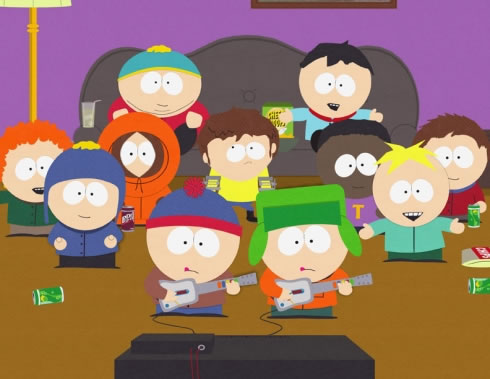
South Park is an animated American television comedy series famous for its off-color humor, pop culture parody, and biting satire covering a wide range of topics. It originated as a short film created by college students Trey Parker and Matt Stone, who later developed the series and continue to do most of the writing, directing, and voice acting. The plot revolves around four boys - Stan, Kyle, Cartman, and Kenny - who live in the fictional mountain town of South Park, Colorado. The show has received many awards, including three Emmys for Outstanding Animated Program.
Comedy Central has aired a total of 181 episodes since the show's debut in 1997. Doug Herzog, who brought South Park to the network, credits the show's strong ratings for putting Comedy Central "on the map". The twelfth season concluded in November 2008, and the thirteenth season will premiere in March 2009.[4] Parker and Stone are under contract to produce new episodes through 2011.
Two feature-length movies have also been released; the musical film South Park: Bigger, Longer & Uncut had a widespread theatrical run in 1999, and the three-episode Imaginationland story arc was reissued straight-to-DVD in 2008
The show revolves around the adventures of four boys — Stan Marsh, Kyle Broflovski, Eric Cartman, and Kenny McCormick (often called "the boys" when as a group for easier reference) — and their friends living in the fictional small town of South Park, Colorado. The boys were in the third grade but midway through season four they entered the fourth grade where they have stayed ever since. There are many recurring characters on the show, including the boys' families, school staff, and other students. These include Leopold "Butters" Stotch, Chef (who no longer appears in the show), Mr. Hankey, Towelie, Jesus, and Satan. There are also many other minor characters.
South Park picture
South Park's early episodes tended to be shock value-oriented and featured more slapstick-style humor than later episodes. Although satire had been used on the show occasionally earlier on, it became more prevalent in later episodes. Episodes have parodied Michael Jackson ("The Jeffersons"), Paris Hilton ("Stupid Spoiled Whore Video Playset"), and The Passion of the Christ ("The Passion of the Jew"), as well as addressed serious political issues such as terrorism ("Cartoon Wars"), American immigration policy ("Goobacks"), gay marriage ("Follow That Egg!"), and the Terri Schiavo case ("Best Friends Forever").
Controversies over South Park have occurred numerous times. The show depicts what many people find to be taboo subject matter, from its use of vulgarity ("It Hits the Fan") to its satire of subjects such as religion and cults (such as "All About Mormons", "Bloody Mary", "Red Hot Catholic Love", Fantastic Easter Special", and "Trapped in the Closet"), sexuality ("The Death Camp of Tolerance"), Drugs ("My Future Self n' Me", "Up the Down Steroid"), and global warming ("Two Days Before the Day After Tomorrow"). Stone and Parker are self-described "equal opportunity offenders" and episodes often lampoon all sides of a contentious issue, rather than taking a concrete position. Usually, the boys and/or other characters ponder over what has transpired during an episode and convey the important lesson taken from it with a speech commonly beginning with the phrase "You know what? I've learned something today...".
South Park poster
The show's style of animation was inspired by the paper cut-out cartoons made by Terry Gilliam for Monty Python's Flying Circus, of which Trey Parker and Matt Stone have been lifelong fans.[14] Construction paper and traditional stop motion cut-out animation techniques were used in the original animated shorts and in the pilot episode made for Comedy Central. The pilot episode required three months to produce. Subsequent episodes have been produced by computer animation providing a similar look to the originals while requiring a fraction of the time to produce. Episodes of South Park are usually completed in four or five days.
Adobe Photoshop (and previously CorelDRAW) is used to design new characters and objects, which are then imported into and animated using Maya. (PowerAnimator was used prior to the fifth season).The use of PowerAnimator and Maya is an interesting choice as they are mainly used for 3D computer graphics; Parker and Stone compared it to "building a sandcastle with a bulldozer." However, according to Director of Animation Eric Stough, PowerAnimator was chosen because it "has the best shadow and ray casting, so it looks like construction paper sitting on a camera stand." Several other techniques are used to achieve the "amateur" look. Objects are moved across the screen manually and a "stepped" curve is applied to every second frame giving motion an "organic jumpy look". The show is also animated at 24 frames per second and transferred to 30 fps video using the 3:2 pulldown process.[19]
PowerAnimator was also used for special effects such as the disco lights in the episode "Big Gay Al's Big Gay Boat Ride" and the laser beams in "Mecha-Streisand". Nowadays, the team uses Motion for special effects. In the beginning, animation was done on SGI workstations linked to a 54-processor render farm that could render 10 to 15 shots an hour. For a short time, Windows computers were used. When Maya was released for Mac, production shifted to Mac workstations. The studio now runs a 120-processor render farm that can produce 30 or more shots an hour.
The appearance of characters and scenes has become less crude over time, largely in order to enhance the comedic effect. Special effects, such as prepackaged explosions, have replaced cardboard-style fires. Light shading has been used to highlight "sappy", movie-like moments as well as some of Cartman's dramatic poses. Some episodes, such as "Tweek vs. Craig" and "Mr. Garrison's Fancy New Vagina", have even incorporated sections of live action video. A few episodes use an entirely different style of animation, for example, portions of "Good Times with Weapons" was done in anime style, while "Make Love, Not Warcraft" was done partly in machinima.(wikipedia)
South Park American Anime Television ComedySouth Park American Anime Television Comedy

South Park AnimeSouth Park Anime

The Adventures of Tintin

Tintin Wallpaper
he Adventures of Tintin (French: Les Aventures de Tintin) is a series of comic strips created by Belgian artist Hergé, the pen name of Georges Remi (1907–1983). The series first appeared in French in a children's supplement to the Belgian newspaper Le Vingtième Siècle on 10 January 1929. Set in a painstakingly researched world closely mirroring our own, the series has continued as a favourite of readers and critics alike for 80 years.
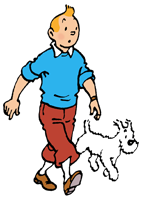
The hero of the series is Tintin, a young Belgian reporter. He is aided in his adventures from the beginning by his faithful fox terrier dog Snowy (Milou in French). Later, popular additions to the cast included the brash, cynical and grumpy Captain Haddock, the bright but hearing-impaired Professor Calculus (Professeur Tournesol) and other colourful supporting characters such as the incompetent detectives Thomson and Thompson (Dupond et Dupont).
The success of the series saw the serialised strips collected into a series of albums (24 in all), spun into a successful magazine and adapted for film and theatre. The series is one of the most popular European comics of the 20th century, with translations published in over 50 languages and more than 200 million copies of the books sold to date.
Tintin Picture
The comic strip series has long been admired for its clean, expressive drawings in Hergé's signature ligne claire style. Engaging, well-researched plots straddle a variety of genres: swashbuckling adventures with elements of fantasy, mysteries, political thrillers, and science fiction. The stories within the Tintin series always feature slapstick humour, offset in later albums by sophisticated satire, and political and cultural commentary.
Tintin is a reporter, and Hergé uses this to present the character in a number of adventures which were contemporaneous to the period in which he was working (most notably, the Bolshevik uprising in Russia and the Second World War) and sometimes even prescient (as in the case of the moon landings). Hergé also created a world for Tintin which managed to reduce detail to a simplified but recognisable and realistic representation, an effect Hergé was able to achieve with reference to a well-maintained archive of images.
Though Tintin's adventures are formulaic—presenting a mystery which is then solved logically—Hergé infused the strip with his own sense of humour, and created supporting characters who, although predictable, were filled with charm that allowed the reader to engage with them. This formula of comfortable, humorous predictability is similar to the presentation of cast in the Peanuts strip or The Three Stooges. Hergé also had a great understanding of the mechanics of the comic strip, especially pacing, a skill displayed in The Castafiore Emerald, a work he meant to be packed with tension in which nothing actually happens.
Hergé initially improvised the creation of Tintin's adventures, uncertain how Tintin would escape from whatever predicament appeared. Not until after the completion of Cigars of the Pharaoh was Hergé encouraged to research and plan his stories. The impetus came from Zhang Chongren, a Chinese student who, on hearing Hergé was to send Tintin to China in his next adventure, urged him to avoid perpetuating the perceptions Europeans had of China at the time. Hergé and Zhang collaborated on the next serial, The Blue Lotus, which has been cited by critics as Hergé's first masterpiece. Interestingly, The Blue Lotus includes a reference to the European stereotypes associated with China, in a context that causes them to appear ridiculous.
Tintin Photo
Other changes to the mechanics of creating the strip were forced on Hergé by outside events. The Second World War and the invasion of Belgium by Hitler's armies saw the closure of the newspaper in which Tintin was serialised. Work was halted on Land of Black Gold, and the already published Tintin in America and The Black Island were banned by the Nazi censors, who were concerned at their presentation of America and Britain. However, Hergé was able to continue with Tintin's adventures, publishing four books and serialising two more adventures in a German-licensed newspaper.
During and after the German occupation Hergé was accused of being a collaborator because of the Nazi control of the paper (Le Soir), and he was briefly taken for interrogation after the war. He claimed that he was simply doing a job under the occupation, like a plumber or carpenter. His work of this period, unlike earlier and later work, is politically neutral and resulted in stories such as The Secret of the Unicorn and Red Rackham's Treasure; but the apocalyptic The Shooting Star reflects the foreboding Hergé felt during this uncertain political period.
A post-war paper shortage forced changes in the format of the books. Hergé had usually allowed the stories to develop to a length that suited the story, but with paper now in short supply, publishers Casterman asked Hergé to consider using smaller panel sizes and adopt a fixed length of 62 pages. Hergé took on more staff (the first ten books having been produced by himself and his wife), eventually building a studio system.
The adoption of colour allowed Hergé to expand the scope of the works. His use of colour was more advanced than that of American comics of the time, with better production values allowing a combination of the four printing shades and thus a cinematographic approach to lighting and shading. Hergé and his studio would allow images to fill half pages or more, simply to detail and accentuate the scene, using colour to emphasise important points. Hergé notes this fact, stating "I consider my stories as movies. No narration, no descriptions, emphasis is given to images".
Hergé's personal life also affected the series; Tintin in Tibet was heavily influenced by his nervous breakdown. His nightmares, which he reportedly described as being "all white", are reflected in the snowy landscapes. The plot has Tintin set off in search of Chang Chong-Chen, previously seen in The Blue Lotus, and the piece contains no villains and little moral judgment, with Hergé even refusing to condemn the Snowman of the Himalayas as "abominable".
Hergé's death on 3 March 1983 left the twenty-fourth and final adventure, Tintin and Alph-Art, unfinished. The plot saw Tintin embroiled in the world of modern art, and the story ended as he is about to be killed, encased in perspex and presented as a work of art, , although it is unknown whether he really dies at the end of the story.(wikipedia)
Tintin and SnowyTintin and Snowy

Captain HaddockTintin and Snowy

The Adventures of TintinThe Adventures of Tintin